When audiences hear a pianist perform an étude by Frédéric Chopin, the music often sounds effortless—notes flowing quickly and smoothly across the keyboard. However, behind that seemingly flawless performance lies weeks, months, and sometimes years of careful preparation.
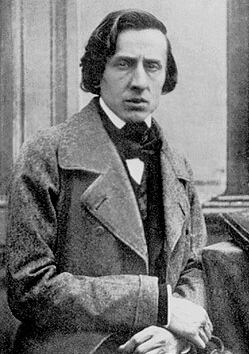
Chopin’s études are not only beautiful musical works but also technical studies designed to challenge even the most skilled pianists. Pieces such as the famous “Revolutionary Étude” or “Winter Wind” demand exceptional finger speed, control, and endurance. Before a pianist can even think about performing the piece for an audience, they must first spend hours studying the score, identifying difficult passages, and planning how to approach the technical demands.
The preparation process usually begins slowly. Pianists practice small sections of the piece at a reduced tempo, focusing on accuracy and clarity. This step is crucial because mistakes learned early in practice can become difficult habits to break. Musicians also analyze the structure of the étude—looking for patterns, chord progressions, and phrasing that reveal how the music should flow.
Beyond technique, interpretation plays a major role. Chopin’s music is known for its expressive quality, so pianists must think carefully about dynamics, tone color, and rubato—the subtle stretching and relaxing of tempo that gives the music emotional depth. Many performers listen to recordings by great pianists and consult teachers to refine their interpretation while still developing a personal artistic voice.
Physical conditioning is another important part of preparation. Fast passages and repeated patterns can strain the hands if practiced incorrectly. Pianists often practice with attention to relaxed movement and efficient finger technique to prevent injury while maintaining speed and precision.
Finally, once the technical and musical elements are secure, performers begin practicing the étude as if it were a concert piece. This includes playing it straight through without stopping, simulating performance conditions, and managing performance nerves. By the time the pianist steps onto the stage, the piece has been practiced hundreds—sometimes thousands—of times.
To the audience, the performance may last only a few minutes. Yet those minutes represent countless hours of dedication, patience, and artistic exploration. In the end, performing a Chopin étude is not just about technical mastery; it is about transforming disciplined practice into expressive music that connects with listeners.