When you died and left me, I could not shake the touch of your breath on my arm. I felt it as I waited on my porch for you, that last day. I felt it as you lost your last breath, and the only proof of your life was the sensation of your lungs on my skin.
I remember the week before. How we sat on the porch swing and you told me you had cancer of the bone. But Carrie, I did not cry or mourn. I only hoped that you—my memories of you—could stay with me as a reminder of you, for me.
And when that reminder goes—and it will go—I will be left by you. You gave me that last remnant, and I ruined it. I don’t know where it all goes and went.
A sound shocked my pen out of my hand. My answering machine beeped once more and then its noise was replaced. The voice of my father boomed.
“Elliot? If you’re home, answer. I haven’t seen you for quite some time. Just call.”
And then I was left. I took a breath and gave it back. I picked up my pen and put it once more to the paper.
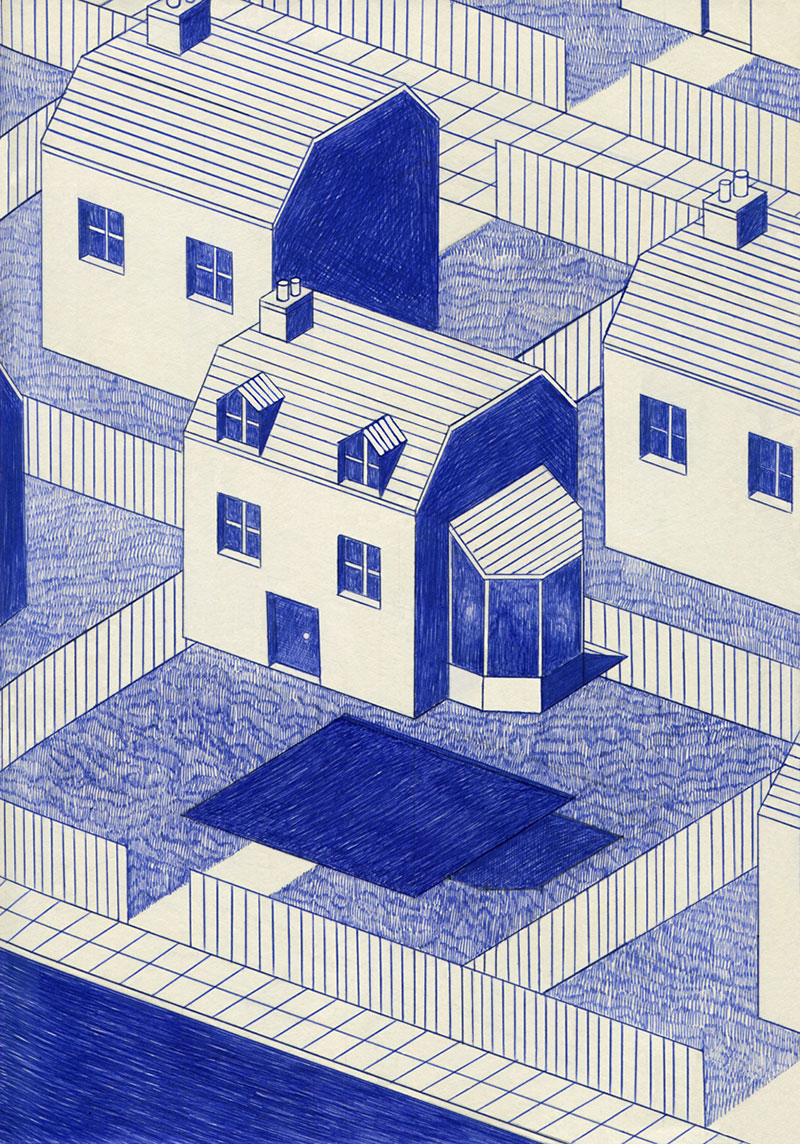
And after you told me, I remember, we walked. We walked the neighborhood, soon after it had rained—spent cumuli hanging in the sky. And down the street you lived—Burgundy Drive—the houses lined up in their uniform suits of brick and paint as soldiers to a battle.
And I remember this—I remember it clear—and in my dreams I see it, but then I turn. And in my dreams, I look at you, but I don’t. Your face is gone, and I see a landscape of what isn’t you.
But you are not leaving. For you can’t. Or is it, you shouldn’t?
I’ve tried down your streets—Burgundy Drive—but the houses have changed. Soldiers in disarray, their painted uniforms aren’t those from my memory and their bricks have rearranged themselves. So where are those houses? Where is your street? To think it’s been a week since your death.
My door rattled with a knock. The rattle persisted. I peered out at the silhouetted figures through the curtains of my window.
They stopped their noise and paused, looking through my window. I jumped to the side, but too late. The voice of my father shook through the door-frame.
“We know you’re home. Let us in. It’s been more than three months since anyone’s seen you. Let us in!”
So I waited. He yelled out again, and I waited again. The rattling continued. I picked up my pen and continued.
To believe it’s only been a week, and already you leave me with only my wanting.
I expect this from my family and I expect this from my neighbors. But not you.
Give yourself back.
The incessant rattling disappeared, and so I stopped writing. I heard jingling metal, and I heard a key fit into my keyhole. I leapt up in a panic and ran to the door, blocking it closed with my body.
It struggled against my body, and I struggled with it too until I gave, my body crumbling to the floor. The door rushed open, and light rushed against my skin, my father and family standing over me. My head rushed and my eyes fluttered, and I fell unconscious.
I don’t remember much, but there are flights of memories I have. I recall my father taking the letter I had written for you and reading it carefully, concern filling his face.
I awoke inside an ambulance, the light blinding me, beeps deafening me, and restraints crippling me. My thoughts returned to you. And no, I would not forget you! Try as you might, I need you and I remember you.
I’ll remember your face, despite my dreams. I’ll remember your breath, despite my skin. And I’ll remember your street—Mahogany Drive—and I will keep it with me. You can’t take yourself from me. The ambulance moved on, a porch-swing rocking over brass-pennied manholes.